makeup – base makeup

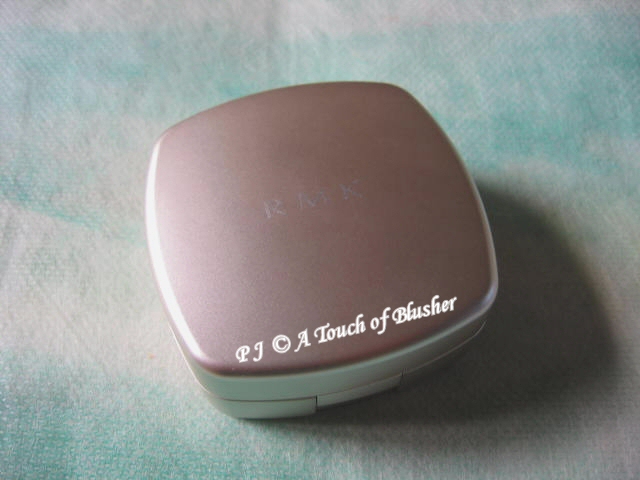
(RMK Super Basic Concealer in 02)

A few weeks ago, I reviewed RMK‘s Powder Foundation EX, one of RMK’s three new base makeup items. Today I am sharing my thoughts on one of the two other products, Super Basic Concealer.

It is available in four shades and has SPF 28 and PA+++, and it uses a twist-click dispenser. The concealer has a creamy consistency, a good opaque coverage and a glowy matte finish. (It doesn’t have visible shimmery particles.)

So far, I have been having little issue with darkness in the eye area, so I can’t really say how well it works on heavy dark circles. (But it does even out the skin tone in the eye area quite well.) My main issue is the occasional breakout, and this product covers the redness effectively.

Also, I think the texture and consistency are just right. It is not so liquidy that it gets blended off where I want it to stay (it is always annoying when a concealer ends up around the breakout and not on the breakout), and the cream is just malleable enough to be blended nicely with enough play time to ensure a seamless finish.

I use this concealer underneath my powder foundation, which helps set the concealer. Once it sets, it is very long-lasting and doesn’t travel or disintegrate (even on my oily skin, where cream-based base makeup products don’t tend to stay on very well).

The shades tested for this review are 01 and 02. My skin tone is between light and light-to-medium (I use ZA Two-Way Foundation in 22 and I would go for the second OC shade in Japanese foundations), and 02 is a fairly good match for me. If you have a fair skin tone and tend to go for the lightest foundation shade, then 01 should be a good fit for you. (Both shades are quite neutral-toned and don’t look pinkish. Apart from being darker, 02 is slightly warmer than 01.)

Overall, Super Basic Concealer seems to be a very competent product, and, for me, it works well in concealing redness/breakouts. Also, the SPF/PA factors are a welcome feature as they provide extra protection for the breakout area, which can be particularly sensitive to sunlight.

Related posts:

“Japanese Base Makeup” series

Thierry Mugler Bleu Glacis Cooling Effect Concealer

Prescriptives Site Unseen Brightening Concealer SPF 15

{ 4 comments }

(SUQQU Clear Veil Powder in 101 Clear (refill))

In this post, which I wrote in 2007, I mentioned SUQQU’s Clear Veil Powder. It was launched in fall 2006 and became an instant sensation.

It is a semi-transparent pressed powder. According to SUQQU, the main function of this product is that it sets the foundation without altering the foundation color or leaving any powdered finish. It is also claimed to be able to cover pores and deliver an oil absorption effect.

(It is available in 101 Clear (matte) and 102 Clear Pearl (very slightly shimmery). The case, refill, and brush (similar to the flat powder brush of RMK’s Powder Foundation EX) are all sold separately.)

When I touch the surface of the powder, it feels like a piece of frosted soft plastic. I can’t hardly pick up any powder with my fingers. It does seem considerably different from nearly all the other pressed-powder products I have come across.

The application can be slightly tricky, and, over the last couple of years, I have noticed that the SUQQU sales assistants’ application techniques have changed. I remember they used to advise that we sweep the brush gently across the powder (as we normally would with any pressed powder), but it appeared to me then that the brush was not really able to pick up the powder this way. Now the sales assistants seem to apply a lot more pressure with the brush to sweep up the powder, which I think is the only way to pick up the powder from the pan.

When the powder is applied on the skin (after I apply my powder foundation), the particles are invisible. Therefore, it is certainly true that it is able to set the foundation without leaving any trace of it (no alteration of foundation color or powdered finish). What I see is that the finish of my powder foundation becomes a little more matte and that the appearance of pores is more blurred, and this is obviously down to the semi-transparent silicone particles.

The pore-diffusing efficacy is decent, but I do feel that the oil-control ability is somewhat on the weak side.


In my post two years ago, I mentioned that I imagined Clear Veil Powder would be a pressed-powder equivalent of a silicone-based liquid/gel primer (think Smash Box’s Photo Finish) and that it would probably work as a “post-primer” (something with the same purposes as those of a primer but applied after the foundation). After I have tried it, I do still think of the product in the same way. But I do find that I can also use it as a primer and apply it before my powder foundation, so the product is more versatile than I expected.

Whether Clear Veil Powder serves all of our needs would vary from person to person. If you have finally found a foundation that offers the perfect match with your skin tone and think all the loose/pressed powder products that you come across interfere with the perfect match, then this setting powder is definitely worth looking into. If you use a setting powder to diffuse the look of pores, then this product may work well for you too. But if you rely on a setting powder to keep you shine-free, then this might not be the product you are looking for.

Overall, I commend the design of the product. In Japanese cosmetics, there are a lot fewer multi-purposed products, and, especially within Japanese base makeup, it seems to be mostly about one product serving one very specific purpose.

As I was reminded of all the Japanese office/kitchen/storage gadgets that faithfully and effectively serve their sole duties, I think Clear Veil Powder is another prime example of this sophisticated simplicity of consumer product design that Japanese brands (not just beauty brands) excel at. It also exemplifies the unique quality of Japanese makeup that will always keep me curious and fascinated.

Related posts:

SUQQU Contour Shadows
(another example of a unique and specialized product)

SUQQU Spring 2009 Collection Review

My Personal Take on SUQQU

{ 10 comments }

(RMK Powder Foundation EX in 103)

RMK is one of the Japanese beauty brands known for their base makeup. It doesn’t update its base makeup range as often as many other Japanese beauty lines, so it really attracts attention when it does. Today I am reviewing RMK’s latest powder foundation, Powder Foundation EX (SPF24, PA++, in 9 shades).

The whole idea of this foundation is to create the dewy finish of a cream foundation with a powder foundation. The foundation features a “powder” layer and a “pearl” layer. The powder layer is used as the usual powder foundation, while the pearl layer is used as a highlighter (with the brush that comes with the foundation).

This foundation gives a slightly-above-medium coverage, and the pore coverage and the lasting power are satisfactory. In terms of the dewy finish that this powder foundation sets out to achieve, it is a successful product. The powder is very fine and it doesn’t create a powdered look. The finish is indeed dewy and glowy.

According to the instruction sheet that comes with the foundation, the pearl layer should be avoided on the T-zone and the sides of the nose, which can get oily overtime. I think the pearl layer is definitely more suitable on the top of the cheekbones to both emphasize the dewy look and to highlight the cheekbones.

The downside of this foundation is that it has very little oil control efficacy. If you have oily skin, the dewy finish (just from the powder layer) will not hold overtime and will make your face appear even more oily as the day goes on. (I tried using Kiss Mat Chiffon Powder (which is the most matte loose powder I have) to set the foundation, but my face still started to look oily within two hours.)

The shade you see here is 103, which is a yellow-toned shade. It goes on a little darker than it looks in the pan, and it is about one shade darker than Majolica Majorca Skin Remake Compact in OC20 and two shades darker than my staple, ZA Two-Way Foundation in 22. (The other shade tested is 202, which is a pale pink-toned shade that is considerably paler than ZA 22.)

There are two other things worth mentioning. Firstly, the sponge that comes with the foundation doesn’t work particularly well. The fact that it is so soft and smooth actually works against itself, as it is not porous enough to grab and dispense/spread the powder efficiently. It still helps the foundation create a smooth finish on the face, but it takes a long time. (The sponge from my ZA Two-Way Foundation, which is just an ordinary powder foundation sponge similar to most others, actually works better with this foundation.)

Secondly, I like the grey velvet sleeves for the foundation case and the brush. At the first sight, they didn’t look as glamorous as the dark ones from Chanel, Dior, YSL and SUQQU. But overtime, they prove to be very practical as they never look as dusty as the dark sleeves can sometimes look. They are also somewhat chic-looking.


Overall, I think this product falls into the category of fall/winter foundations from Japanese brands and will suit people with normal or dry skin. Essentially, if your skin can take an emollient cream foundation and if you like the dewy finish from it, then this product can work well for you. (It should also provide a speedier application than applying a cream foundation). However, if you have combination or oily skin, this product is certainly not for you (even if you avoid the pearl layer). A more matte foundation with a good sebum control ability, such as Coffret D’Or’s Beauty Lasting Pact UV, will suit you a lot better.

I will review RMK’s new Super Basic Liquid Concealer next month.

Related posts:

Japanese Base Makeup Week

Foundation Face-Off: Chanel vs. SUQQU

Foundation Face-Off: Jill Stuart vs. SUQQU

Jill Stuart Moist Silk Liquid Foundation

Primavista Powder Foundation Moist Touch

{ 21 comments }

(images/info from www.cosme.net)

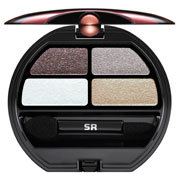
As one of my readers has observed, blue seems to be the color for summer 2009. YSL, Magie Deco, and Chicca are bringing out blues for their summer 2009 collections, and so is Sonia Rykiel. (Even the packaging is in blue.)

The collection includes:

– Quatre Eyeshadow Collection (1 new variation, above)

– Ombre à Paupières Crème (3 new shades)


– Gloss Trio 2009 (3 variations)

– Poudre Colorée Pour Le Visage (2 variations)

– Nail Color L (3 new shades)

A 2009 version of L’Atout Eclat Sublime (Treatment Makeup Base S) will also be released (in Golden Caress, SPF 15 and PA+). It contains gold pearl to create a shimmery beige finish.


The collection will be released in Japan on May 15. All the items are limited editions.

Related posts:

Beauty Brand Focus: Sonia Rykiel

Sonia Rykiel Spring 2009 Collection

Sonia Rykiel Holiday 2008 Collection

{ 4 comments }

Part 5: My Favorites (& Yours)

(One of my favorites:
Kiss Mat Chiffon Powder)

Some of you who have been reading my blog probably already know some of my favorite Japanese base makeup products, but I thought I’d present them in one round-up post for your future reference. Links to previous posts on products which are still available are provided below.

– Primers

I actually tend not to use primers at all. For my oily skin, I use as few base makeup products as I can after skincare and before point makeup. I used to use primers a long time ago, and I did find a couple of products from Ettusais (a yellow-based color-adjusting primer and a pore-concealing primer) to be quite effective. Among the primers I have talked about so far (that are currently available), I have been relatively pleased with SUQQU’s Makeup Base Creamy and Makeup Base Brightup. If you are interested, please have a look at my post on Coffret D’Or’s Beauty Lasting Veil UV and Lunasol Smoothing Makeup Base as well.

– Powder Foundations

I have been a fan of Shiseido ZA’s Two-Way Foundation for many years. I think the product has been revamped once since I started using it (while the product name remained the same), but the change is (fortunately) minimal. (It has very slightly less coverage and the finish is marginally more luminous.)

Other than ZA Two-Way Foundation, I think one of the best powder foundations I have tried in the last couple of years is Coffret D’Or’s Beauty Lasting Pact UV, which has very good sebum-control efficacy. (The link above will also take you to my thoughts on Lunasol’s Skin Fusing Powder Foundation.) Some of my other posts on Japanese powder foundations include those on SUQQU’s Powder Foundation Glow, Jill Stuart’s Smooth Silk Powder and SUQQU’s Powder Foundation Fresh, and Primavista’s Powder Foundation Moist Touch.

– Pressed/Loose Powder

At the moment, all my favorite pressed powders are from Raycious, and they have been discontinued. In terms of loose powder, my favorite is Lavshuca’s Face Powder (in Lucent). Mat Chiffon Powder from Kiss is almost equally good too. I also enjoy using Coffret D’Or’s Makeup Powder, but it slightly falls short on pore coverage and sebum control compared with the previous two.

(Lavshuca has launched Finish Powder (in two shades) on February 1st. It is replacing Face Powder, but Face Powder might still be available for a little while.)

To finish off the series, I’d like to mention the wave of mineral makeup (particularly foundations) arriving in Japan at the moment.

Since last year, I have started to notice that more and more Japanese beauty blogs are covering mineral foundations from the west. While I like some of the mineral eyeshadows I have tried, I have not yet been a fan of mineral foundations. There is very little doubt that mineral foundations have attractive appeals, as true mineral-based foundations can be saviours for people with very sensitive skin. However, I feel that, compared with some of the best (Japanese) foundations that I have used, they generally lack sebum control and pore coverage and they often lack staying power. For me, purely in terms of the quality of the finish (not of their skincare benefits), mineral foundations are generally mostly about coverage and not much else, as their straightforward ingredients do not seem to provide multi-faceted results.

It seems that many Japanese consumers are very open to trying out new products, so I think the novelty factor will work its magic for a while. But I do wonder, compared with some of the best foundations that one can buy in Japan, whether most of the mineral foundations will continue to hold consumers’ attention in the next few years. I guess this will depend on future product developments from both sectors.

So that’s it from me now, and I hope you enjoy this series. Now I would love to know your favorite Japanese base makeup products. You could simply drop in a short comment with the name of the item(s), and it would be really helpful if you would tell us your skin type as well. Of course, if you have any comment on this series or any question, do please feel free to post a comment here too.

I look forward to hearing from you!

{ 38 comments }

Part 4: Which brands shall I look into?

(IPSA’s new Pore Protect Foundation)
(image from www.ipsa.co.jp)

Today I will briefly mention some of the Japanese beauty brands that are noted for their base makeup lines. Direct links to the base makeup pages of the brands’ official websites are provided if possible. (Some sites are very flash-heavy and don’t have direct URLs for individual pages.) I will also update this post when there is something new and noteworthy on the scene.

Here we go:

– The three “megabrands“/ “superbrands

Currently, in Japanese cosmetics, “megabrand” refers to the main base/point makeup lines of Shiseido, Kanebo, and Kosé. At the moment, they are Maquillage (of Shiseido), Coffret D’Or (of Kanebo), and Esprique Precious (of Kosé). These lines are usually worth looking into because their latest products are often the results of the companies’ latest foundation technologies.

Sofina Primavista

Primavista, Kao Sofina’s main base makeup line and Raycious’ predecessor, is the answer to the megabrands’ base makeup lines. Right now two collections have been released (fall/winter 2008 and spring/summer 2009), and it will be interesting to see how the line develops.

Albion Exage

Various versions of powder foundations from Exage (and Exage White) have been among the best-sellers in Japan for years. Fans often comment on the fine and light texture of the power and the natural finish.


IPSA

IPSA is particularly strong in skincare and base makeup. All IPSA counters have a consultation area where you can find out which skincare and base makeup items are suitable for you. You can also check which foundation shade goes with your complexion.

Paul & Joe

Paul & Joe has been known for its base makeup for quite a while. The products tend to create a luminous finish, with a low-to-medium coverage for an ultra-natural look. (Even though Paul & Joe is a French fashion line, its beauty line is produced in Japan.)

SUQQU

SUQQU has been very strong in base makeup, and I feel that most of its base makeup products tend to be quite suitable for dry skin (even their powder foundations). Their concealers (Stick Concealers), cream foundation (simply called Foundation) and Clear Veil Powder are particularly popular.

Lunasol

I think Lunasol has been so popular with its gorgeous point makeup collections season after season that some forget that some of its base makeup products are also very well-received. In the February 2008 issue of Biteki, Water Cream Foundation and Micro Finish Powder N are listed among the top five favorite base makeup items (in their own categories) with Biteki readers. In the February 2009 issue, Skin Fusing Powder Foundation is among the top 10 powder foundations.

Sonia Rykiel

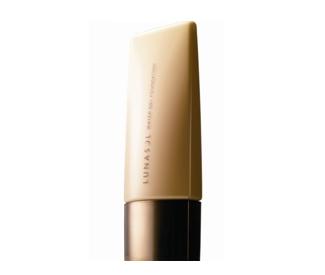
Sonia Rykiel is another French fashion brand that features an essentially Japanese beauty line. Among the base makeup products, Water Gel Foundation (which is claimed to contain 80% water) and the primer (currently Treatment Makeup Base S) have been popular for as long as I can remember.

ECM

ECM started off as a base makeup brand and has a well-structured range of base makeup items. Please see my brand profile article on ECM here.

Ex:beaute

Recently, Ex:beaute has been getting quite a lot of Japanese beauty magazine coverage. Their current slogan is to create the luminous and flawless “actress skin”, which is ready for anything hi-definition.

Shu Uemura

Since Shu Uemura is sold internationally, the range of foundation (and loose powder) shades is considerably wider than that of most other Japanese beauty brands (that are sold within East/ Southeast Asia). There are also quite a few different foundation products to choose from.

Other than the brands above, a few cult products deserve a mention. RMK‘s various primers, AYURA‘s Zero Clear Colors (color-adjusting concealers), Chacott‘s (a dancewear brand) Finishing Powder, and Kesalan Patharan‘s Sheer Micro Powder all have their places on the Japanese base makeup map.

In the final post of the series, I will mention some of my favorite Japanese base makeup products and I will finish the series with a few further notes.

{ 12 comments }

Part 3: Which one is my shade?

(Shiseido Maquillage Lasting Powdery UV)
(image from www.shiseido.co.jp/mq)

I am often asked about choosing the right foundation shade from a Japanese brand. One question that comes up the most is “What is the difference between Ochre shades and Beige Ochre shades?” If you have wondered about the same thing, I hope this part of the series will help you a little.

Many major Japanese foundation lines categorize their shades into three groups:

– Neutral Ochre (OC) shades
– Yellow-toned Beige Ochre (BO) shades
– Pink-toned Pink Ochre (PO) shades

(Notice that some brands don’t carry PO shades.)

Sometimes the shade name can vary. (Coffret D’Or’s pink-toned shades are called Soft Ochre shades.) But, on a typical shade chart, neutral shades are usually in the middle, with pink-toned shades on the left and yellow-toned shades on the right. Below is the shade chart for Coffret D’Or’s Lasting Power Pact UV:

(shade chart for Coffret D’Or Lasting Power Pact UV)
(image from www.kanebo-cosmetics.jp/coffretdor)

In the shade chart for all the Sofina Primavista foundations (below), Ochre 05 is marked as the “standard shade”, which is the shade that suits most people of East-Asian descent. This happens to be the shade I would usually go for, as the second lightest Ochre shade usually suits me quite well.


(shade chart for all Primavista foundations)
(image from www.sofina.com/jp/primavista)


If you are of East-Asian descent and you have never tried a foundation from Japanese brand, then I would recommend trying an Ochre shade, which is likely to suit you reasonably well. Also, once you know what an Ochre (neutral) shade looks on you, it is slightly easier to know what to expect if you decide to try a yellow-toned or pink-toned shade.

(Since most Japanese makeup lines are only sold in Japan or in East/ Southeast Asia, the foundation shades are not made to suit a wider range of complexions. If you are of Caucasian descent, then you can probably find Japanese foundation shades that suit you. If you are of Latina or Afro-Caribbean descent, then most Japanese foundations might be too light for you. But I have had good feedback from readers of Afro-Caribbean descent on Japanese loose powder products, which are usually translucent and can work for most complexions.)

However, not all Japanese foundation shades are categorized like what you see above. Other brands use a linear presentation of the shades and the shade names don’t suggest their undertone. Below is Paul & Joe’s Protective Fluid Foundation N:

(Paul & Joe Protective Fluid Foundation N)
(image from www.paul-joe-beaute.com)

Overall it can be a lot trickier to tell which shade would suit you the most. In this case, apart from weeding out shades that might be too light/dark for you, try to compare the swatches in terms of yellow/pink undertones.

(If I have to pick a shade only by looking at the swatches here, I would first eliminate the two lightest shades, 10 and 20. I tend to avoid peachy/pink-toned shades, and 30 looks like a shade that might work for me as it looks slightly more yellow-toned than the neighboring shades.)

Having to choose a foundation shade on-line can be very difficult. (I can occasionally choose the wrong shade even when I can see all the shades in person…) But once you have some experience, things will get a lot easier.

(Sometimes it might be worth learning to recognize the Japanese characters for the three shade groups. Please refer to the Primavista shade chart for the characters (those printed within the color swatches). The names happen to be the same ones used by Maquillage, so you will be able to make more sense of the shades you see for Maquillage’s Lasting Powdery UV at the top of this post.)

Are you ready for some on-line browsing? Tomorrow I will talk about some popular Japanese base makeup lines.

Related posts:

Jill Stuart Moist Silk Foundation

Majolica Majorca Skin Remake Compact

Japanese Base Makeup Week Part 1 & Part 2

{ 22 comments }

Part 2: When are they coming out?

(Sofina Primavista’s spring/summer 2009
base makeup lineup)
(image from www.sofina.co.jp/primavista)

Partly due to the speed of development in Japanese base makeup (and partly due to marketing tactics), the frequency in which a brand’s base makeup products get updated is a lot higher than that of most western brands.

Many major Japanese beauty brands release two base makeup collections a year. Spring/summer releases are usually in March and April, and fall/winter releases are usually in September and October. (They are more or less released two months after the seasonal point makeup collections are available.)

The size of the collection varies. Sometimes there are just a couple of items (perhaps a new foundation and a primer), and sometimes there can be a major collection revamp.

Very often, when a new product is launched, the existing equivelant will be discontinued. This means that a Japanese base makeup product can sometimes only be available for 12 months. (This is especially the case with some department store brands.) For example, during the Raycious era (2000 – 2007), a new powder foundation was released every March and the previous version would be discontinued. Not all the products are updated at this rate, but many do get revamped about every other year.

So, on the whole, every six months, a base makeup collection goes through an update, and possibly a few products are phased out. (One obvious exception would be a new base make range whose lineup is still growing, like Primavista.) My suggestion is that, if you discover a Japanese base makeup product that you can’t live without, consider picking up some extras. (The next version might not suit you equally.)

There are some general differences between spring/summer and fall/winter releases. Spring/summer releases tend to have higher SPF and PA. They are often more sweat-resistant and are better at sebum-control, and the finish is often slightly more matte. Sometimes, the coverage is more on the natural side.

Fall/winter releases usually have a more emollient texture. The foundations sometimes have more coverage, and the finish is more luminous. The primers tend to be for further moisturizing the skin.

It can be quite useful to know in which season a product (particularly a foundation) is released. In Japan, there is quite a big temperature difference between summer and winter. If you have combination or oily skin and you happen to live in a tropical or sub-tropical climate, you probably don’t need a very emollient cream foundation (even though it might be a best seller in Japan.)

(Though the choice of a powder foundation or a liquid/cream foundation is often a matter of preference, I tend to suggest powder foundations for people with combination or oily skin. I think those with normal or drier skin do have more choices. Liquid/cream foundations would generally work fine, and there are some powder foundations with a very smooth and velvety texture that can work very well on dry skin even without a primer.)

Apart from regularly checking the official websites of Japanese beauty brands, Japanese beauty magazines offer great editorial content on new base makeup releases. Biteki runs a major base makeup feature twice a year (usually in the May and October issues). Voce’s popular monthly feature, “Voce Experiment” regularly tests out the latest foundations. Even if you don’t read Japanese, these features are usually abundant in photos of new products.

Tomorrow, I will touch upon the choice of foundation shade.

Related posts:

SUQQU Base Makeup Kit

Esprique Precious Spring/Summer 2009 Base Makeup Collection

Japanese Base Makeup Week (Part 1)

{ 6 comments }

Part 1: Why Japanese?

(from Kanebo Coffret d’Or via YouTube)
.

Many years ago, I read an article on Japanese base makeup, which mentioned that the technologies in Japan involved in producing base makeup were about a decade ahead of those of most western brands. While it is not easy to prove this (and whether it is still true today), I do feel that Japanese base makeup items are constantly out-doing their western counterparts.

It seems that we can draw inferences from the cultural side of things. I have often heard that, if one can only choose to wear one makeup item for the day, a western consumer is likely to choose a mascara (or an eyeliner). On the other hand, a Japanese consumer would go for a foundation. (It can be a sweeping generalization, but I do find some truth in it.)

From the articles written by Kaoru Saito, a Japanese beauty expert, it seems that Japanese people perceive having shine and open pores in public as something impolite. Having a fresh and impeccable complexion, free from shine and open pores, seems to be part of the social etiquette. (Maybe this is why there are a lot more products (mainly primers) that tackle these two issues in Japanese beauty brands.)

In this case, it is the consumers’ needs that drive product research and innovation, and the result is products that work better.

I have oily skin and almost always use a powder foundation, and I think I probably want quite a lot from it. I want it to have a fair amount of coverage but to still look natural. I want it to cancel out mild redness, conceal pores, control sebum and last throughout the day. The powder should have a smooth texture, and the finish should be predominantly matte.

Generally, I find that Japanese foundations cancel out mild redness and conceal pores considerably more effectively than western ones. Also, the foundations I have tried that have a good sebum-control efficacy are all from Japanese lines. So, based on personal experience, I’d say that Japanese base makeup products generally perform a lot better.

(I have less experience with liquid/cream foundations. If you have any observation on how Japanese products fare with western ones, please do let me know your thoughts.)

In the next few days, I will talk briefly about the rhythm of product releases in Japanese base makeup, how to choose the right shade, some Japanese beauty brands that are particularly known for base makeup, and some of my personal favorites and recommendations. Do come back!

(The ad on top of this post is the TV ad for Coffret D’Or’s latest powder foundation, Lasting Power Pact UV. It was officially out on March 1st and is something I am interested in trying.)

.

Continue reading the series:

Part 2: When are they coming out?

Part 3: Which one is my shade?

Part 4: Which brand shall I look into?

Part 5: My Favorites (& Yours)

.

Related posts:

Western vs. Japanese…Who’s Winning?

All About Japanese Cosmetics

“Japanese Brand Profile” Series

{ 12 comments }

(image from www.biteki.com)

YSL will be releasing the spring/summer 2009 base makeup items in Japan on March 6th.

Matt Touch Compact Foundation SPF 20 has already been launched in the US. I didn’t see it the last time I walked past my local YSL counter, and I am looking forward to seeing it soon.


(image from www.cosme.net)

YSL’s Tient de Pearle (from nearly 10 years ago) is one of the very few foundations from western beauty brands that I actually liked. Even though it was not among the most sebum-controlling powder foundations for my oily skin, the powder was so silky and smooth that I did enjoy using it. I am hoping that Matt Touch will have a similar smooth texture with better sebum control. (Plus, Matt Touch is housed in a similar case to the opulent golden case for Tient de Pearle.)

In addition, YSL will release Matt Touch Radiant Base, in three color-adjusting shades, with SPF 12 and PA++.

{ 4 comments }